Why Hospital-Recorded Birth Times Are Often Inaccurate
Hospital-recorded birth times are useful, but they are not recorded with astrological precision in mind. Rounding, delayed notation, clock discrepancies, and inconsistent definitions of the “moment of birth” mean that even official records can be off by several minutes. This article explains why those small differences matter and when birth time rectification becomes necessary.
Most people assume that if they have a hospital birth certificate or medical record, their birth time is accurate enough for astrological analysis. This assumption is understandable but often incorrect. It is also the most common reason people resist birth time rectification—they believe their documented time is already reliable.
Hospital records provide a documented time, which is certainly better than having no record at all. However, the way birth times are recorded in medical settings does not align with the precision that astrological calculations require. This article explains why this gap exists, what kinds of errors are common, and why even minor discrepancies can significantly affect chart interpretation.
Table of Contents
What Hospitals Actually Record
To understand the problem, you need to know what happens in a delivery room when a birth time is noted.
Medical staff are focused on the health of the mother and child. Recording the exact moment of birth is a secondary administrative task, not a clinical priority. The time that ends up on the birth certificate is typically written down after the immediate medical procedures are completed—not at the precise moment the child is born.
There is also no universal standard for what constitutes the “moment of birth.” Different hospitals, and sometimes different staff members within the same hospital, may use different reference points:
- The moment the baby’s head emerges
- The moment the baby fully exits the birth canal
- The first cry or breath
- The time the umbilical cord is cut
- The time the birth is formally announced or noted by attending staff
Each of these can differ by one to several minutes. In astrological terms, this variation is not trivial.
6 Common Sources of Error in Hospital Birth Times
Rounding to Convenient Numbers
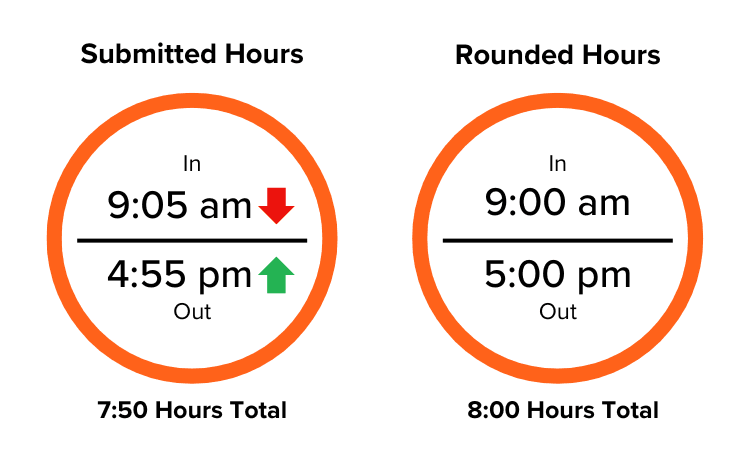
This is perhaps the most common issue. Medical staff frequently round birth times to the nearest five or ten minutes. A birth that occurs at 10:42 AM may be recorded as 10:40 AM or 10:45 AM.
This practice is not negligent—it is simply how administrative tasks are handled in busy hospital environments. But for astrology, those two or three minutes can change the position of the Ascendant or shift the boundaries of divisional charts.
Delayed Recording
In many cases, the birth time is not written down immediately. The staff attends to the newborn first—clearing airways, checking vitals, handing the baby to the mother, cutting the cord. Only after these steps does someone note the time.
By then, several minutes may have passed. The person recording the time may estimate backwards, or simply write down the current time, or round off based on memory. The result is a recorded time that may be off by three to ten minutes, sometimes more.
Clock Discrepancies
Not all clocks in a hospital are synchronised. The clock in the delivery room may differ from the clock at the nurses’ station, which may differ from the official time. Staff may glance at their wristwatch, a wall clock, or a monitor—each potentially showing a slightly different time.
Additionally, clocks in older hospitals or rural healthcare centres may not be regularly calibrated. A clock running two or three minutes fast or slow is not unusual.
Emergency and Complicated Deliveries
In cases involving caesarean sections, forceps delivery, or other complications, the priority is entirely on medical intervention. Noting the time accurately is the last thing on anyone’s mind.
In emergency situations, the recorded time is often an approximation filled in later, sometimes based on when paperwork was completed rather than when the birth actually occurred.
Home Births Registered Later
In parts of India, especially in rural areas, births still occur at home and are registered at government offices afterwards. In such cases, the birth time is based entirely on the memory of family members, which is then rounded or approximated when entered into official records. For these individuals, birth time rectification is not optional—it is often the only way to arrive at a usable chart.
Even when the family is confident about the time, there is often no reliable clock reference, and recollections can be off by fifteen minutes or more.
Night Births and Shift Changes
Births occurring late at night or during shift changes are particularly prone to errors. Staff coming on or off duty may record times carelessly. In some cases, the date itself may be recorded incorrectly if the birth occurs close to midnight.
A birth at 12:05 AM might be mistakenly recorded as 11:55 PM the previous day, or vice versa. This changes not just the chart but potentially the entire day’s planetary positions.
Why Small Time Differences Matter in Astrology
In everyday life, a difference of five or ten minutes is negligible. In astrological chart construction, it is not. Understanding why small errors matter so much helps explain why birth time rectification has become a specialised field within Vedic astrology.
Ascendant Sensitivity
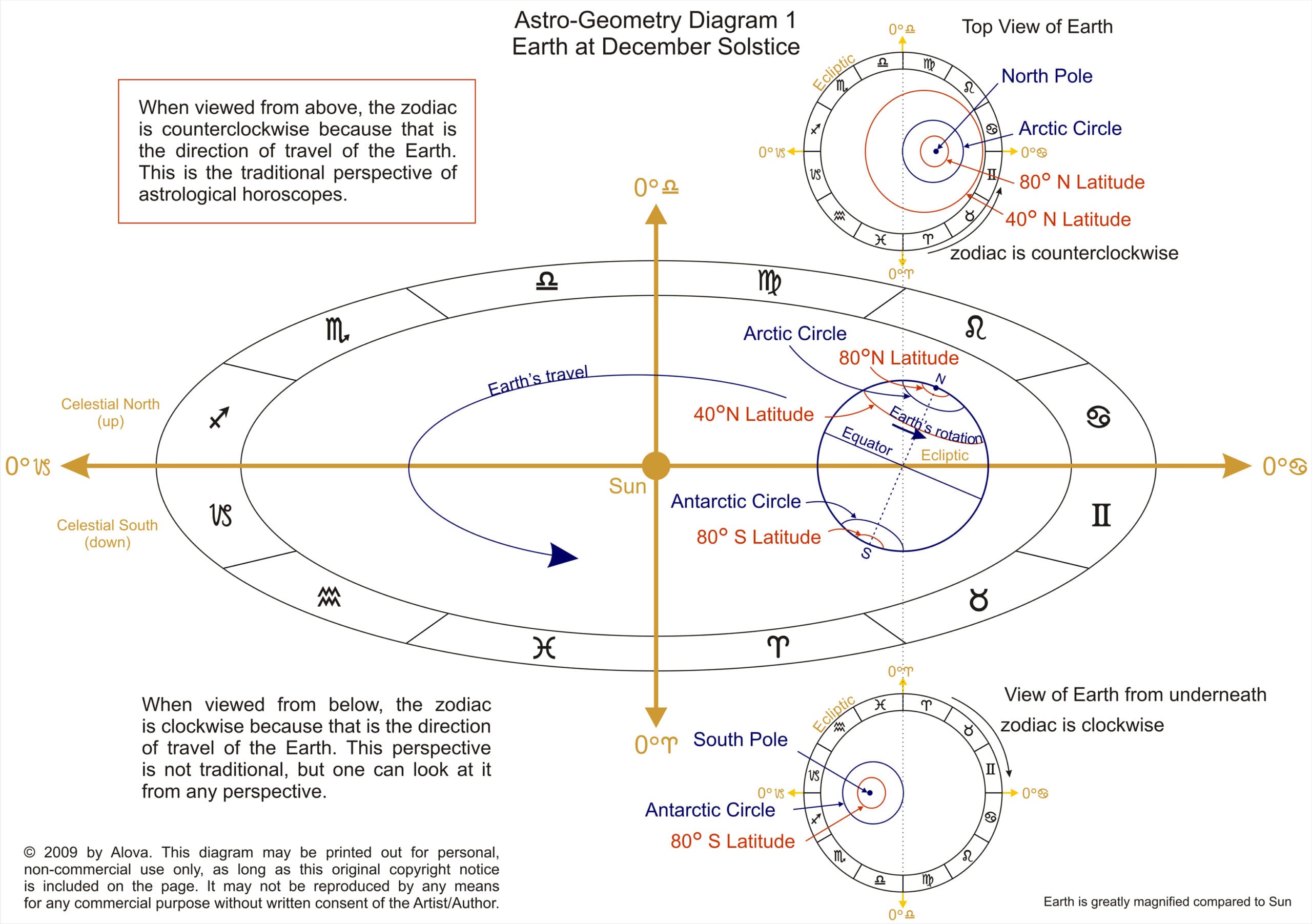
The Ascendant, or Lagna, is the degree of the zodiac rising on the eastern horizon at the moment of birth. It moves through all 360 degrees of the zodiac in approximately 24 hours, which means it shifts about one degree every four minutes.
A difference of ten minutes can move the Ascendant by two to three degrees. In many cases, this is enough to shift the Ascendant into a different Navamsha, Drekkana, or other divisional chart. In some instances, it may even change the rising sign itself—particularly if the recorded time falls near the boundary between two signs. When the Ascendant sign itself is in doubt, birth time rectification becomes critical for any meaningful chart analysis.
Divisional Charts
Vedic astrology relies heavily on divisional charts (Vargas) such as the Navamsha (D9), Dashamsha (D10), and Dwadashamsha (D12). These charts divide each sign into smaller segments, making them highly sensitive to birth time accuracy. This sensitivity is a key reason why birth time rectification exists as a practice.
A Navamsha, for example, spans only 3 degrees and 20 minutes of arc. The Ascendant passes through an entire Navamsha in roughly thirteen minutes. A five-minute error in birth time can place the Navamsha Lagna in a completely different sign.
Higher divisional charts like the Shastiamsha (D60) are even more sensitive. A one-minute error can alter the D60 Lagna entirely. While not all practitioners rely on such charts, those who do need birth time accuracy measured in minutes, not quarter-hours.
Planetary House Positions
Planets near house cusps are particularly affected by birth time errors. A planet at 29 degrees of a sign, for instance, may fall in different houses depending on the exact Ascendant degree.
If Mars is at 29°50′ of the fourth house and the recorded time is off by a few minutes, the corrected Ascendant might place Mars in the fifth house instead. This changes the interpretation substantially—fourth house Mars and fifth house Mars carry very different meanings.
Dasha Calculations
The starting point of planetary periods (Dashas) is calculated from the Moon’s exact position at birth. A small shift in birth time changes the Moon’s degree, which in turn shifts the balance of the first Dasha.
If someone is told they are in the last year of a Saturn Dasha when they are actually still two years away from its end, any predictions based on that timing will be off. The person may make decisions based on an expected planetary period that has not yet arrived. When Dasha predictions consistently fail to match life events, birth time rectification should be considered before assuming the astrologer or the system is at fault.
The Confidence Problem
When someone has a hospital record stating a specific time, they naturally assume that time is correct. This confidence is the problem.
An astrologer working with an incorrect but “official” time will construct a chart that looks valid but does not accurately represent the native’s life. Predictions based on this chart may partially fit, or may seem consistently off, but neither the astrologer nor the client knows why.
The client may conclude that astrology does not work, or that the astrologer is not skilled. In reality, the foundational data—the birth time—was flawed from the start. This is precisely the situation that birth time rectification is designed to address.
What Birth Time Rectification Addresses
Birth time rectification is a method of working backwards from known life events to determine a more accurate birth time. Instead of accepting the recorded time as final, the birth time rectification process tests whether the chart produced by that time actually corresponds to the person’s lived experience.
Major events—education, career changes, marriage, health issues, relocations—leave signatures in a chart. If the recorded time is correct, these events should align with the appropriate planetary periods and transits. If they do not, the birth time is adjusted until a consistent pattern emerges.
This process does not produce a magically perfect time. It produces a time that better fits the observable facts of the person’s life. The result is a working chart that an astrologer can use with greater reliability.
Honest Limitations
Birth time rectification is not infallible. It depends on the skill of the practitioner, the accuracy of the life event data provided, and the complexity of the individual chart. In some cases, especially when the recorded time is already close to accurate, the adjustment may be minor. In others, the rectified time may differ significantly from the recorded one.
Birth time rectification also cannot overcome a complete absence of data. If no approximate time is available, and no significant life events can be dated, the process becomes speculative.
However, when a hospital-recorded time exists but produces inconsistent results, rectification offers a rational method to arrive at a more functional chart.
Conclusion
Hospital records provide a starting point, not a guarantee. The practices involved in recording birth times—rounding, delays, clock errors, and inconsistent definitions of “moment of birth”—mean that even official documents can be off by several minutes.
For casual interest, this may not matter. For serious astrological work, it often does.
If your chart has never quite fit your life, or if predictions based on your recorded time have been inconsistent, the issue may not be with astrology or with the astrologer. The issue may be with the time itself. A professional birth time rectification can help determine whether your recorded time is accurate or needs correction.
This is where birth time rectification becomes necessary.